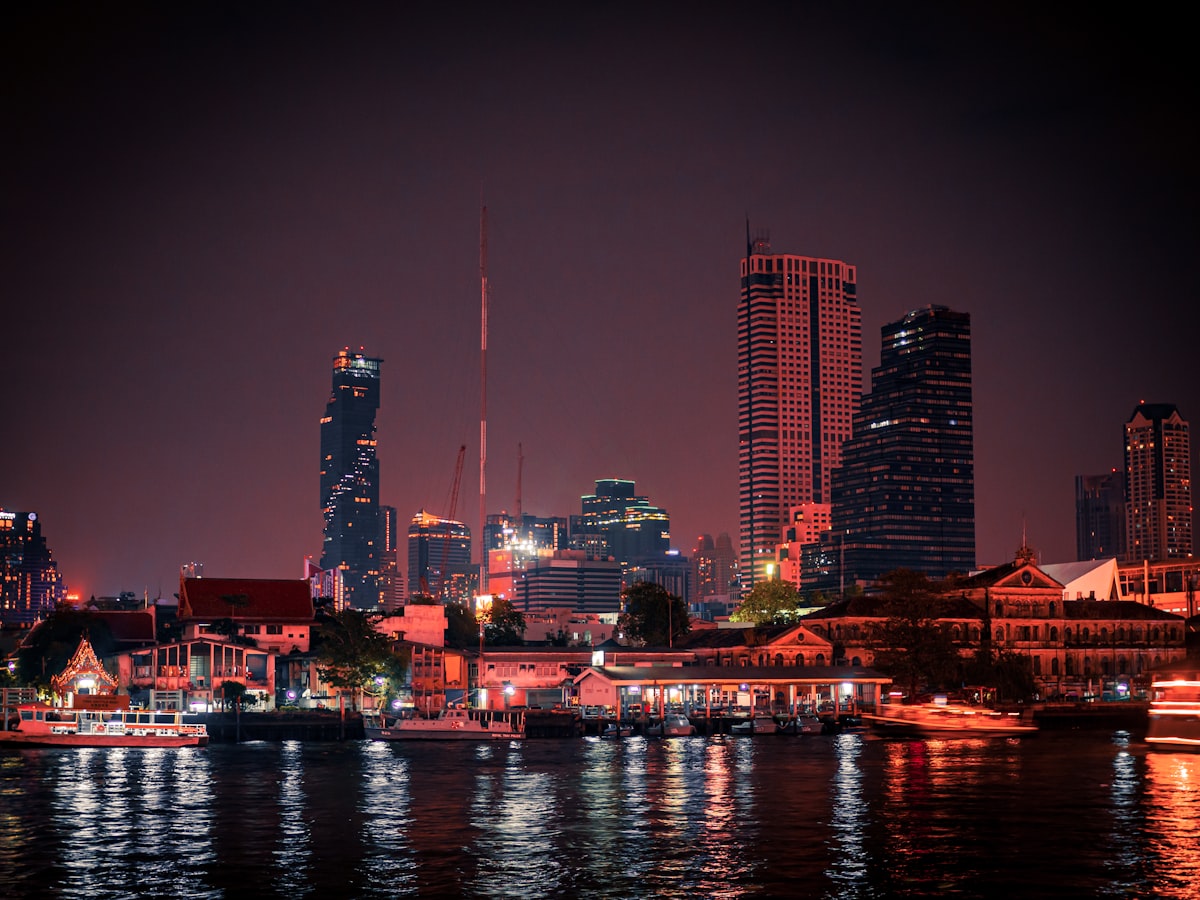
Leave the skyscrapers behind and explore the 'Venice of the East' by private long-tail boat.
Modern Bangkok is often defined by its 'Sky-Train' urbanism—glittering malls, rooftop bars, and towering steel. But to understand the true DNA of the city, you have to look down at the water. Before the roads were paved, Bangkok was a city of klongs (canals), earning it the nickname 'Venice of the East.' While many canals were filled in to make way for cars, the district of Thonburi on the west bank of the Chao Phraya remains a watery labyrinth.
We skip the crowded tourist boats and board a private, high-speed long-tail boat. These iconic vessels, powered by repurposed truck engines, are the Ferraris of the river. As we veer off the main river into the narrower klongs, the temperature drops and the noise of the city vanishes. The landscape shifts to traditional wooden stilt houses draped in bougainvillea, small family temples, and orchid nurseries.
You see life as it has been for a century: elderly residents fishing from their porches, monks traveling to temples by boat, and floating grocery stores selling everything from coconuts to detergent. We stop at the Artist's House (Baan Silapin), a 200-year-old wooden house turned into a community art space, to watch a traditional Thai puppet show. It's a reminder that Bangkok's soul isn't in its height, but in its depth—in the slow, rhythmic flow of the river that continues to sustain it. By the time we return to the pier near the Mandarin Oriental, the skyscrapers seem like a temporary addition to a city that will always belong to the water.